
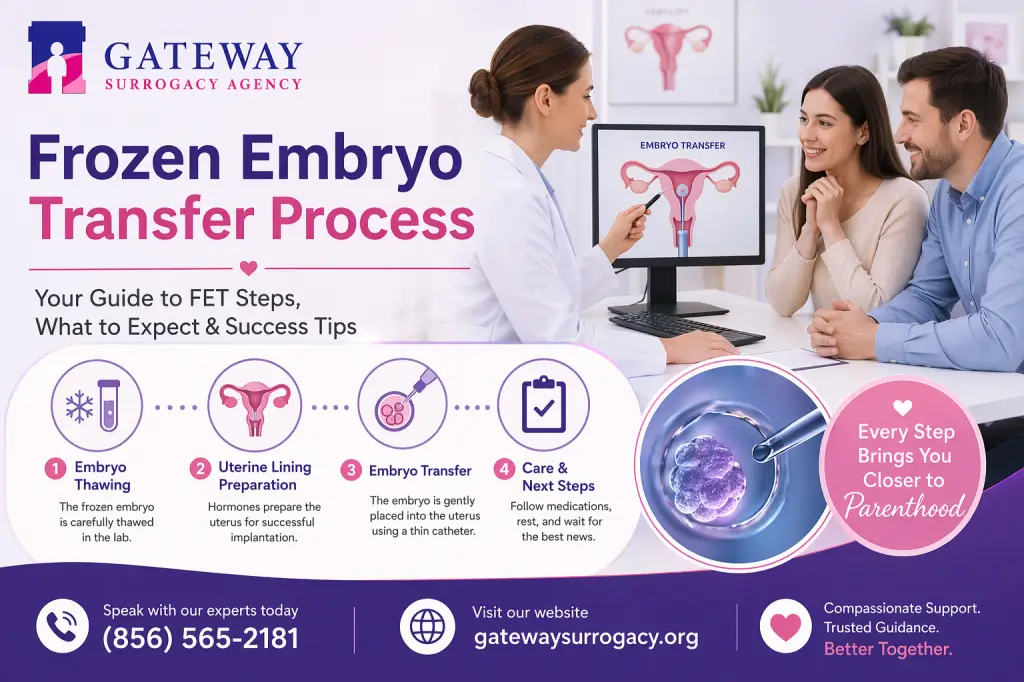
Frozen Embryo Transfer (FET) is an important step in assisted reproduction. It gives many individuals and couples a real chance to achieve pregnancy. If you are planning this treatment, the Frozen Embryo Transfer Process can make the journey easier and less stressful when you know each stage involved.
This guide will walk you through the process in simple terms while helping you understand frozen embryo transfer steps, the embryo transfer procedure IVF, and what you may experience along the way.
What Is Frozen Embryo Transfer?
Frozen Embryo Transfer is a procedure where a previously frozen embryo is thawed and placed into the uterus.
These embryos are created during an earlier IVF cycle. Instead of transferring them immediately, they are frozen for future use. This allows better timing and improves the chances of implantation in many cases.
Why Choose Frozen Embryo Transfer?
There are several reasons why doctors recommend FET:
- The body gets time to recover after egg retrieval
- Hormone levels can return to normal
- The uterus can be better prepared
- It may improve success rates
This method is now widely used in modern fertility treatments.
Preparation for Frozen Embryo Transfer
Proper preparation for frozen embryo transfer is one of the most important parts of the process. A well-prepared body increases the chances of success.
1. Uterine Lining Preparation
The uterine lining must be thick and healthy. Hormone medications like estrogen and progesterone are used to prepare it.
These hormones help create the right environment for the embryo to attach.
2. Monitoring and Tests
Doctors monitor your progress through:
- Ultrasound scans
- Blood tests
This ensures that everything is perfectly timed.
3. Healthy Lifestyle Choices
Simple lifestyle habits can support your body:
- Eat fresh and balanced meals
- Avoid smoking and alcohol
- Stay relaxed and well-rested
These small steps support overall fertility health.
Frozen Embryo Transfer Steps
Understanding the frozen embryo transfer steps can help reduce anxiety and make you feel more prepared.
Step 1: Thawing the Embryo
The frozen embryo is carefully thawed in a lab. Advanced techniques make this process safe and effective.
Most embryos survive the thawing process successfully.
Step 2: Embryo Assessment
After thawing, specialists check the quality of the embryo. Only healthy embryos are selected for transfer.
Step 3: The Embryo Transfer Procedure IVF
The embryo transfer procedure IVF is simple and quick.
- A thin, soft catheter is used
- The embryo is gently placed inside the uterus
- The procedure usually takes a few minutes
It is not a surgical process and is generally painless.
Step 4: Short Rest Period
After the procedure, you may rest for a short time. Full bed rest is not required.
Most people return to normal routine activities with minor precautions.
What to Expect During Frozen Embryo Transfer
Knowing what to expect during frozen embryo transfer can help you feel calm and prepared.
Here’s what typically happens:
- The procedure is done at a fertility clinic
- No anesthesia is usually needed
- It takes about 15–20 minutes
- You can go home the same day
You might feel slight discomfort or mild cramping, which is normal.
After the Transfer: The Waiting Period
After the procedure, there is a waiting period of around 10 to 14 days. This phase can feel long and emotional.
During this time:
- Continue all prescribed medications
- Avoid heavy physical activity
- Focus on staying calm
A pregnancy test will confirm the result after this period.
Signs of Successful Embryo Transfer
Many people look for signs of successful embryo transfer during the waiting period.
Some possible signs include:
- Mild cramping
- Light spotting
- Breast tenderness
- Feeling tired
However, not having symptoms does not mean the procedure failed. The only confirmed result comes from a pregnancy test.
Tips to Improve Success
While not everything is in your control, certain habits can support better outcomes:
Follow Instructions Carefully
Take all medications exactly as prescribed.
Eat Nutritious Food
Healthy meals support your body during this phase.
Stay Stress-Free
Try meditation, light walks, or relaxing activities.
Avoid Heavy Activity
Do not lift heavy items or overexert yourself.
Benefits of Frozen Embryo Transfer
FET has several advantages:
- Better control over timing
- Less stress on the body
- Improved uterine environment
- High success rates in many cases
It is considered a safe and effective fertility treatment.
Possible Risks
Frozen Embryo Transfer is generally very safe. However, minor side effects may include:
- Light spotting
- Mild cramps
- Rare infections
Serious complications are uncommon.
Emotional Well-Being
The journey can feel overwhelming at times. Emotional support is very important.
You can:
- Talk openly with your partner
- Seek expert guidance
- Join support groups
Having the right support system makes a big difference.
When to Contact a Doctor
Reach out to your doctor if you notice:
- Severe pain
- Heavy bleeding
- Fever
- Any unusual symptoms
Quick action helps ensure safety.
Final Thoughts
Frozen Embryo Transfer is a key step in the IVF journey. By understanding the frozen embryo transfer steps, focusing on proper preparation for frozen embryo transfer, and knowing what to expect during frozen embryo transfer, you can approach the process with more confidence.
If you are planning fertility treatment and need expert guidance, trusted providers like Gateway Surrogacy can support you throughout the journey. For personalized assistance, you can reach out at 8565652181 and get the care and clarity you need for your next step toward parenthood.
FAQs
Q. What is the frozen embryo transfer process?
The frozen embryo transfer process includes preparing the uterus, thawing the embryo, and placing it into the uterus. The frozen embryo transfer timeline usually takes a few weeks, with results confirmed after 10–14 days.
Q. What is the frozen embryo transfer success rate?
The frozen embryo transfer success rate depends on age and embryo quality. In many cases, it is equal to or higher than fresh IVF cycles.
Q. How does the egg donor matching process work?
The egg donor matching process helps you find an egg donor based on health, genetics, and preferences. Donors are fully screened for safety.
Q. How can I find surrogate mother?
To find surrogate mother, it’s best to work with trusted agencies. They help with screening, matching, and legal steps, especially for surrogate mother NJ cases.
Q. What is sperm washing for IVF?
Sperm washing for IVF is a lab process that selects healthy sperm. The sperm washing procedure for IUI improves chances of fertilization.
Q. Is IVF gender selection possible?
Yes, IVF gender selection (also called in vitro fertilization gender selection) is possible using advanced embryo testing methods.
Q. How much is IVF in New Jersey?
If you’re asking how much is IVF in New Jersey, the cost varies by clinic. A good IVF clinic in New Jersey can provide exact pricing based on your case.
Q. What is the cost of egg freezing in New Jersey?
The cost of egg freezing in New Jersey depends on the clinic and cycle. An egg freezing clinic in NJ can guide you on how much is egg freezing.