
AI Summary
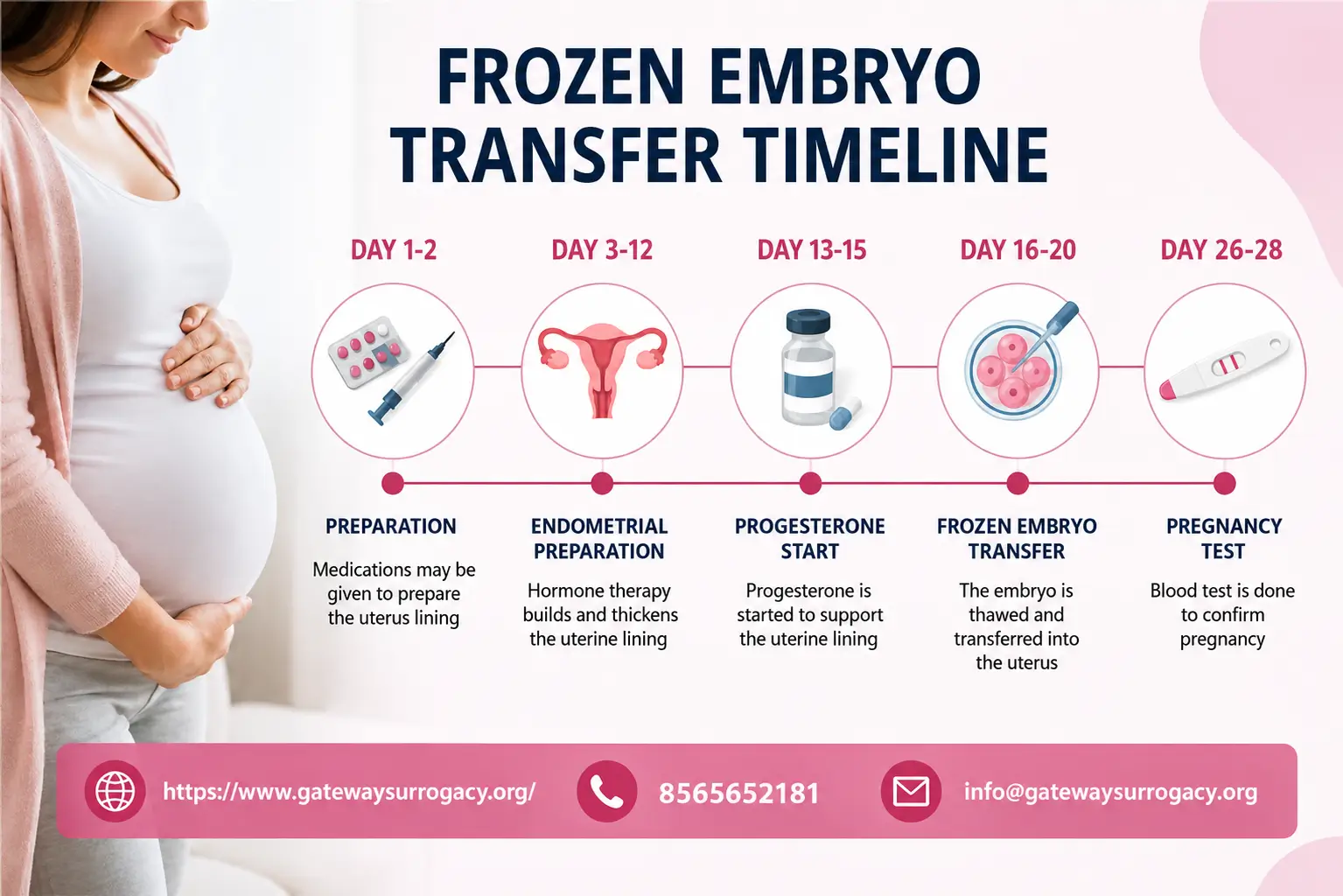
- A frozen embryo transfer usually has five main stages.
- The uterus is prepared and monitored before transfer.
- Success depends on several factors.
- Gateway Surrogacy supports intended parents exploring family-building options.
Introduction
Transferring a frozen embryo can be a bit confusing as each appointment, scan or medication is designed to serve a specific function. Knowing the procedure will make the process easier for parents who are planning to have children and the gestational carriers. The frozen embryo transfer timeline usually involves uterine preparation monitoring, embryo thawing and transfer, and pregnancy tests. However, the exact schedule may change based on the clinic, menstrual cycle, hormone levels and treatment plan. This beginner-friendly guide explains the five main stages in simple language. It also covers factors that may affect the frozen embryo transfer success rate, helping you prepare questions for your care team before treatment begins.
What Happens During Stage 1 of a Frozen Embryo Transfer?
Baseline Assessment and Planning
The process begins with a medical review. The fertility team may review health history, hormone levels, and the uterus. Blood tests and an ultrasound may be scheduled.
The doctor then selects a natural, modified natural, or medicated cycle. In a medicated cycle, estrogen may be prescribed to help the uterine lining grow. The plan depends on the patient and the clinic.
How Is the Uterus Prepared During Stage 2?
Lining Development and Monitoring
The uterine lining must be ready to receive the embryo. Ultrasound scans measure its development, and blood tests check hormones.
If the lining requires additional time, the medication can be altered. When it is complete, it is common for progesterone to begin. The hormone helps to facilitate the process of implantation. Its timing should be in line with the stage of development of the embryo, and the schedule of medication is crucial.
What Happens Before Transfer During Stage 3?
Final Checks and Embryo Thawing
Prior to the day of transfer, the clinic will confirm that the hormone and lining levels are appropriate. Patients receive information on medications and the time of arrival.
The embryo is thawed in the laboratory. An embryologist checks its survival and quality. Genetic testing results may help with embryo selection. However, no test can guarantee pregnancy.
What Should You Expect on Transfer Day?
The Embryo Transfer Procedure
During Stage 4, the embryo is placed inside the uterus through a thin catheter. Ultrasound guidance is used to help position it. The procedure is usually quick and normally does not require anesthesia.
Some patients are asked to have a full bladder. Mild pressure may occur, and most people return home afterward. Prescribed medicines should continue unless the clinic advises otherwise.
What Happens After the Transfer in Stage 5?
Pregnancy Testing and Follow-Up
The clinic will schedule a pregnancy test within a couple of days following the transfer. The blood test is a measure of the hormone hCG, which is created during pregnancy.
Doing tests too early at home can result in a confusing set of results. Be patient until the suggested date and then continue with prescription medications.
After a positive result, another blood test or an early ultrasound may follow. After a negative result, the doctor can review the cycle and discuss possible next steps.
What Affects the Frozen Embryo Transfer Success Rate?
The frozen embryo transfer success rate differs for every person. Factors may include the egg provider’s age when the embryo was created, embryo quality, uterine health, medical history, and laboratory standards.
Clinics may report implantation, pregnancy, or live birth rates, which are different measurements. Gateway Surrogacy recommends asking for results that match your age group, embryo type and treatment situation. A personal review is more useful than a general percentage.
Frequently Asked Questions –
Q. How Long Does a Frozen Embryo Transfer Timeline Take?
A. A medicated cycle often takes several weeks from baseline testing to pregnancy testing. Natural-cycle timing may differ because it follows ovulation.
Q. Is Frozen Embryo Transfer Painful?
A. A majority of people report minor discomfort or pressure, but not intense discomfort. Talk about pain issues with your physician.
Q. How Can Intended Parents Find an Egg Donor?
A. To find an egg donor, use a licensed clinic or established agency. Review medical screening, family history, legal requirements and matching support.
Q. How Can Intended Parents Find Surrogate Mother Support?
A. People searching for “find surrogate mother” should choose a reputable program that offers screening, legal guidance and clear communication.
Q. Does Bed Rest Improve the Frozen Embryo Transfer Success Rate?
A. Extended bed rest is not usually required. Follow your doctor’s instructions about work, exercise, travel, and daily activity.
Ready to Discuss Your Options?
Gateway Surrogacy can help you understand frozen embryo transfer, donor options and gestational surrogacy support.
- Call: (856) 565-2181 or 551-666-5154
- Email: info@gatewaysurrogacy.org
Every frozen embryo transfer timeline is personal. Speak with a qualified fertility specialist for advice based on your medical needs.