
AI Summary
- Frozen embryo transfer (FET) uses a previously frozen embryo created during an IVF cycle.
- The frozen embryo transfer timeline usually takes several weeks, including preparation, transfer, and pregnancy testing.
- Success depends on factors like embryo quality, age, uterine health, and medical preparation.
- The transfer procedure is generally quick and does not usually require surgery.
- Proper guidance from an experienced fertility team can help patients understand their options.
Starting an IVF journey can bring many questions, especially about frozen embryo transfer and its chances of success. Many people want to know how the process works, how long it takes and what factors influence results. A frozen embryo transfer (FET) allows a frozen embryo from a previous IVF cycle to be placed into the uterus at the right time. Understanding the frozen embryo transfer success rate and the steps involved can help patients feel more prepared throughout their fertility journey.
What Is Frozen Embryo Transfer?
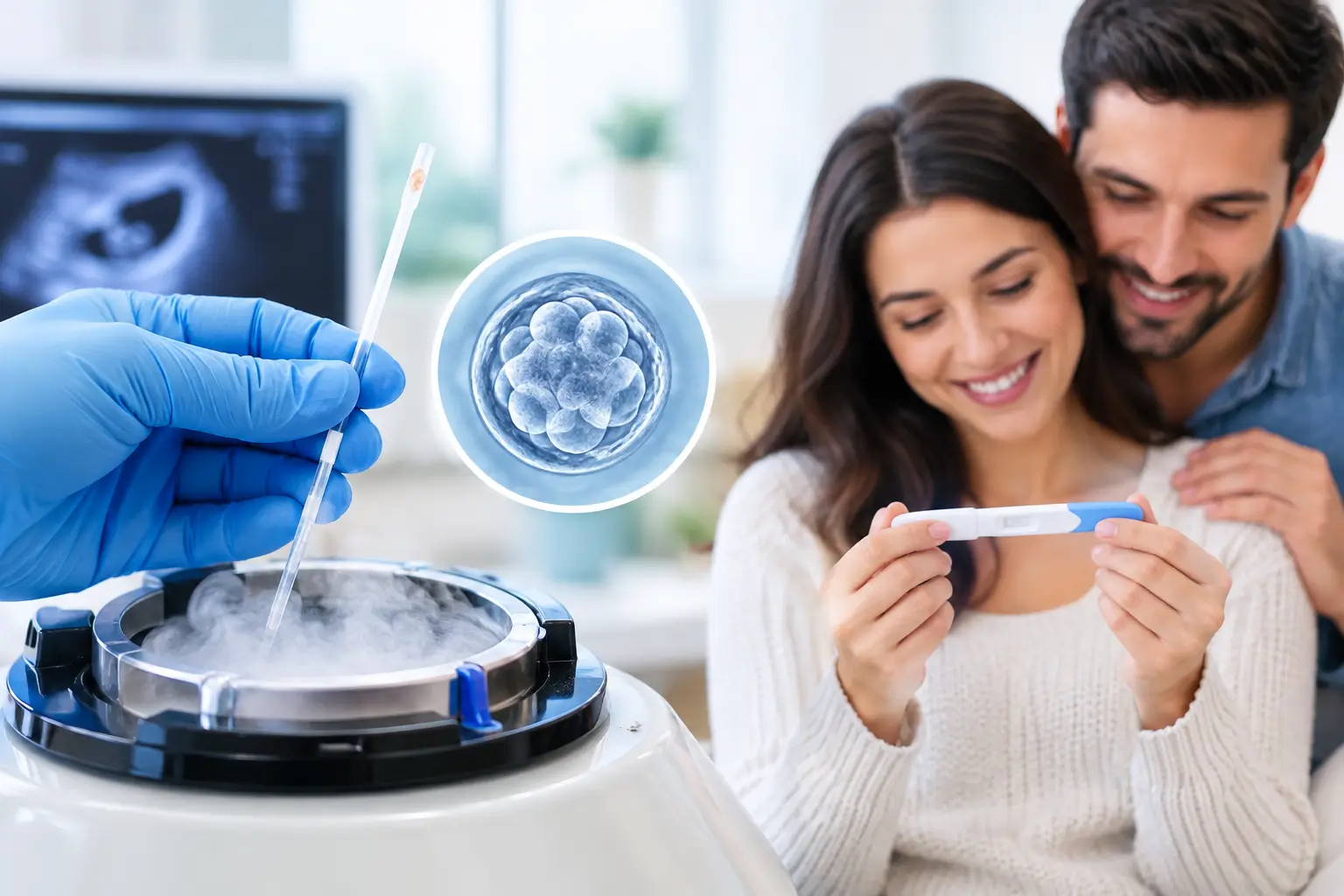
Frozen embryo transfer is an IVF procedure where a previously created and frozen embryo is thawed and transferred into the uterus. The embryo is usually created during an earlier IVF cycle and stored safely until the patient or intended parents are ready for transfer.
Unlike a fresh embryo transfer, FET gives doctors more time to prepare the uterus and choose the most suitable transfer timing. This approach is commonly used when embryos remain after an IVF cycle or when a future pregnancy attempt is planned.
For those exploring frozen embryo transfer in New Jersey, understanding the complete process can make the treatment journey easier to manage.
What Is the Frozen Embryo Transfer Process?
The frozen embryo transfer process in NJ generally includes several important stages:
1. How is the uterus prepared before embryo transfer?
Before the transfer, doctors prepare the uterine lining to create a supportive environment for implantation.
The preparation may include:
- Hormone medications such as estrogen and progesterone
- Ultrasound monitoring
- Checking uterine lining thickness
- Reviewing overall reproductive health
The goal is to make sure the uterus is ready when the embryo is transferred.
2. How is the frozen embryo prepared for transfer?
On the transfer day, the frozen embryo is carefully thawed in a laboratory. Fertility specialists check the embryo after thawing to confirm that it is suitable for transfer.
Modern freezing techniques help preserve embryo quality, allowing many embryos to survive the thawing process successfully.
3. What happens during the embryo transfer procedure?
The embryo transfer itself is usually a simple and short procedure.
During the process:
- A thin catheter is guided into the uterus
- The embryo is placed carefully inside the uterine cavity
- Ultrasound guidance helps with accurate placement
Most patients experience minimal discomfort and can usually return to normal activities after following their doctor’s advice.
What Is the Frozen Embryo Transfer Timeline?
The frozen embryo transfer timeline can vary depending on the treatment plan, but many cycles follow a similar pattern.
1. How long does preparation take before FET?
The preparation phase may take a few weeks. During this time, doctors monitor hormone levels and the uterine lining.
Patients may need:
- Medical appointments
- Blood tests
- Ultrasounds
- Medication adjustments
2. What happens after the embryo transfer?
After transfer, the embryo needs time to implant in the uterus.
During the waiting period:
- Patients continue prescribed medications
- Doctors monitor progress
- A pregnancy blood test is scheduled
A pregnancy test is commonly performed around 10 to 14 days after the embryo transfer.
What Is the Frozen Embryo Transfer Success Rate?
The frozen embryo transfer success rate depends on several medical and personal factors. There is no single success percentage that applies to every patient because each fertility journey is different.
Some important factors include:
1. How does embryo quality affect FET success?
Embryo quality plays a major role in implantation chances. Factors such as embryo development stage and genetic health can influence outcomes.
Higher-quality embryos generally have better potential for successful implantation.
2. Does age affect frozen embryo transfer success?
Age can influence fertility outcomes because it affects egg quality and embryo development.
Doctors consider:
- Age during egg retrieval
- Overall reproductive health
- Previous IVF history
These details help create a personalized treatment plan.
How does uterine health impact success?
A healthy uterine environment is important for implantation. Doctors evaluate factors such as:
- Uterine lining thickness
- Possible abnormalities
- Hormonal balance
Proper preparation can improve the chances that an embryo successfully attaches.
What Factors Can Improve Frozen Embryo Transfer Results?
Many factors can support a successful FET journey.
Helpful steps may include:
- Following medication instructions carefully
- Attending all monitoring appointments
- Maintaining healthy lifestyle habits
- Managing stress with proper support
- Working with an experienced fertility team
A detailed evaluation and personalized treatment approach can help patients understand their specific chances and options. Gateway Surrogacy provides guidance and support for individuals and families navigating fertility-related journeys.
Why Choose Gateway Surrogacy for Frozen Embryo Transfer Support?
Choosing the right fertility support team is an important part of the process. Gateway Surrogacy helps intended parents and families understand fertility options, treatment steps, and the overall journey involved with assisted reproduction.
Their team focuses on providing clear guidance throughout the process so patients can make informed decisions with confidence.
For questions about frozen embryo transfer options, you can contact Gateway Surrogacy:
- Phone: (856) 565-2181 | 551-666-5154
- Email: info@gatewaysurrogacy.org
Frequently Asked Questions –
Q. How successful is frozen embryo transfer?
A. Frozen embryo transfer success varies from person to person. Embryo quality, age, uterine health and treatment preparation all influence outcomes.
Q. How long does frozen embryo transfer take?
A. The complete process may take several weeks, including preparation, embryo transfer and pregnancy testing.
Q. Is frozen embryo transfer painful?
A. Most patients experience little discomfort. The transfer procedure is usually quick and does not require major surgery.
Q. When can pregnancy be detected after FET?
A. A pregnancy blood test is usually performed about 10 to 14 days after the embryo transfer.
Q. Is frozen embryo transfer better than fresh embryo transfer?
A. Both methods can be successful. The best option depends on individual medical circumstances and the recommendation of the fertility specialist.